69th GRAMMY AWARDS – FOR YOUR CONSIDERATION

It has been my busiest year yet. With hundreds of compositions as yet unrecorded, I have been trying to catch up on the backlog, mostly in vain! I know there’s a lot of music here but I hope you’ll take time and gradually listen your way through.

A SONG ALBUM submitted in the Classical Solo Vocal Album category. Featuring soprano Lisa Rombach and the Chamber Orchestra Mannheim conducted by Marek Štilec. The album includes four song cycles: 1918, A SINGLE THORN, STONE & STAR and CANZONI D’AMORE.

A SONG ALBUM

CHAMBER MUSIC submitted in the Classical Chamber Music/Small Ensemble Performance category. A double CD length album of music for viola and piano, piano solo and cello and piano. Featuring Brett Deubner, Christina Gullans and Allison Brewster Franzetti.

CHAMBER MUSIC

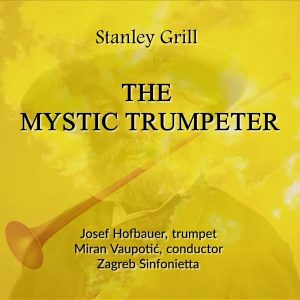
THE MYSTIC TRUMPETER submitted in the Classical Instrumental Solo category. Featuring trumpeter Josef Hofbauer with the Zagreb Sinfonietta conducted by Miran Vaupotić. Music inspired by the poem of the same title by Walt Whitman.

THE MYSTIC TRUMPETER

TWO SYMPHONIES submitted in the Classical Orchestral Performance category. Featuring music from my MUSIC FOR THE EARTH and MUSIC FOR PEACE projects. Performed by the West Bohemian Symphony Orchestra conducted by Marek Štilec.

TWO SYMPHONIES

A ramble…

“How do you know but ev’ry Bird that cuts the airy way, is an immense world of delight, clos’d by your senses five?”

William Blake.

This is going to be rather a ramble, hopefully one that is more coherent than not, but nevertheless a ramble. My reaction to the world we’re living in today, with the firehose of news, mostly bad, and the endless torrent of opinions pouring out on social media. So many people, myself included, with various degrees of success, shouting out into the virtual universe, here I am, please pay attention to me.

I began this ramble with a favorite line by William Blake that often pops into mind. I think of it often when reading whatever news story or opinion piece that comes to my attention, as a reminder that very little of what people write is reflective of reality. Of all the things that we think we know, virtually none of it is really knowable. So little of it is something we experience directly so that we can say, I saw that myself, or I tested that out and, sure, it really works, the evidence is there. Most everything we think is going on in the world is reported second hand (or third, or fourth, etc.) and you can’t assume it to be true. At best, you have to weigh the reliability of sources, and conclude that some things are, perhaps, more likely to be true than others.

The first gate is, of course, our own senses and their limitations. As suggested by the Blake quote, what we sense bears little relationship to reality. Everything we perceive is transmuted along the way. We don’t see, hear, smell, taste or feel anything directly at all, so we can’t know what they really are. Only the trail they leave as they get from outside to inside, assuming we are paying attention enough to notice them. On top of that, there’s all of our own preconceptions, which shape what we perceive into some picture or conclusion, that may or may not reflect some sort of reality. We are biased observers, at best, and anyone who doesn’t question themselves is an unreliable reporter.

The second gate is what we can observe first-hand (very little) versus what we have to take on faith from others (most everything). This applies to everything we think we know. I can know, for instance, with a fair degree of confidence that despite protestations to the contrary, my wife was snoring in bed last night because I woke up and heard it. What I don’t and can’t know for certain is nearly anything I read in the news. In our world today, like many others, I avidly read and try to stay on top of new about the wars in Ukraine and Iran. However, as I do so, I try to keep in mind, that when it comes to reports about war, the news is even more unreliable than about most other subjects (and having on occasion been involved in situations on various jobs that were reported on in the news, I know from first-hand experience, that little of what is reported is accurate). Misinformation has always been a tactic of warring parties, so I have little reason to believe anything said by “talking heads” on the news about what is really going on in Iran, Ukraine, Russia, or anywhere else where the players are motivated to lie. Knowing this, I try my best to parse through the news I happen to read, figure out whether or not sources have any reliability, and frame out some story or other – one that I know may or may not be real.

It is no different with all other things that, taken all together, make up my picture of the world. For instance, I have always had a strong interest in the sciences and am a sucker for all things scientific in nature, to the extent I can even understand them. Do I believe in quarks? Well, I don’t really understand what they are but it seems likely to me that they are something real given the general consensus of physicists in the field who have dedicated their lives to their field of endeavor and written studies that go through the gauntlet of fellow scientists (aka, scientific method) and come out the other end. But, even then, that doesn’t mean they are really right. After all, many scientific theories hung around, believed in by most for centuries, until someone wiser pointed out their fallacies. But analogous to how I digest the news, I always question the sources. Where is the information coming from and is there good reason to believe that source is more reliable than others.

But, then again, consensus is hardly an indicator of reality. Most people, for instance, have reached a consensus that somewhere or other in the universe there exists something they call God (or plural Gods) – a being (or beings) worthy of spending a great deal of time worshipping or thinking about or modifying their behavior to please (or displease). Well, that is one consensus opinion that never, from the earliest age I can remember, made the slightest bit of sense to me. I distinctly recall, sitting in temple with my family as a small child, wondering if all of the adults around me actually believed in the apparent nonsense that was coming from the rabbi standing in the pulpit. In the years since, largely motivated by the obsession so many people have with religion and the impact of that obsession on the lives of so many, I have read millions of words, arguing this way or that, on the subject – and always come to the same conclusion I intuited when I was six – namely, that the beliefs of every single religion, throughout the history of humanity, is all exceedingly unlikely to be a true reflection of reality. That said, coming around again to Blake’s beautiful sentence, I may well be missing out on the delightful interior reality of every little bird that flies by me. That part of it does seem more likely. Reality is far more than our senses can perceive. But turning to a God (or Gods) as an explanation of all that we cannot understand or perceive just seems to me to be weak thinking.

Well, that ramble took a different direction than where I started out – but so it goes. One thing leads to another. Back to the news. As “talking heads” on the news or on social media, who make a living by jolting up the adrenaline levels of their viewers or readers, come to my attention, I try my best to take a step back, take a deep breath, and not let myself get worked into a lather. They are motivated, by either greed or money, or greed for attention, to be provocative, but that doesn’t mean they have a clue. The opposite is more likely. Most lack the clarity of thought or self-reflection to deal with the complexity of reality and question their own opinions or perceptions of whatever subject they are going on about. I often find myself reading something and feeling, yes, this is right on target, only to find, on further consideration, that there’s less to whatever they were saying than was apparent upon first read. Or the opposite. My initial reaction is a negative one, but then, upon further reflection, I realize they might have more of a point than I gave them credit for at first glance. To make matters worse, as AI-generated slop increasingly dominates what algorithms feed to me on social media, what is really true recedes further and further out of grasp, like looking through the world through the wrong end of a telescope.

Although aware (often painfully so) that my personal joys and desires are accidental with no inherent meaning other than that they are mine, I plow on, occasionally expressing myself (as I am doing here) in words, but most often, spending my hours deciding on which next note is the right note to jot down on a staff. It may amount to little but whatever pleasure it gives to me (or to others) is enough. Reminiscent of another famous sentence, this one by Voltaire, that “we must cultivate our own garden.”

By nature, I tend more towards excitability than philosophy. It takes hard work for me to rein myself in and avoid allowing others who attempt to share their intense anxiety about life get to me. For sure, there are endless horrors going on in the world, no different (actually perhaps a bit less than in prior eras) than throughout human history. What to do with all of that information pouring in is the big dilemma. What, out of all that torrent of information and opinions, is actually real? Of that which is real, what can I actually do something about? And, if there is something to be done, what is that something?

As I reflect on all of this, to my own surprise, I have found that my world view has shifted as I’ve grown older. The firm opinions that I held for most of my adult life have changed. For one thing, I was long convinced, evidenced by my consistent votes for Democrats as opposed to Republicans, over 55 years of voting, that generally speaking, Democrats were wearing the white hats and Republicans were the bad guys in my filmic version of the world (oops, this ramble just migrated into politics). In my attempts to not immediately accept what “talking heads” from the left, who mostly held my sympathy, were saying and trying to come to my own independent conclusions, it has become increasingly apparent that, to turn to yet another quote, this one from Shakespeare, “a plague on both your houses” is applicable to today’s (and probably yesteryear’s) politics. Both on the right and the left, both sides are equally unreliable reporters of reality.  In the world of politics, in an Orwellian fashion, black is white and white is black, and neither side holds a monopoly on that sort of thinking. In that world, and what version of this world has ever been different, tending one’s own garden does seem to be very sound advice. Live simply as one can, try to hold fast to what you value most, avoid spreading fear and anxiety, try to pierce through the thicket of misperceptions and outright lies to the extent possible, let others find their own path.

Some thoughts on what makes classical music unique

Sharing some thoughts evoked by two coinciding things. First, I’ve been listening to more jazz than usual, prompted by some of the Substack accounts I follow. Second, I attended a performance by the Boston Ballet yesterday afternoon which paired Stravinsky’s Rite of Spring with a dance choreographed to selections from Max Richter’s recomposed Vivaldi Four Seasons.

These stirred up thoughts about what makes classical Western music different from most other forms or genres of music. The most important difference, in my opinion, is formal structure. Classical music uses the same elements as most any other music – melody, harmony, timbre, rhythm – but combines them within large formal structures in a way that is unique.

Let me begin with the second event – the ballet performance. Stravinsky wrote a score that stands out, despite its numerous contrasting sections, as a unified whole. He uses thematic and harmonic relationships to create a musical story that runs continuously from start to finish. This comes out of a long classical music tradition that started back in the early Renaissance as composers sought to find ways to unify long pieces (such as the movements of a mass) leading to long forms such as are found in the symphonies of Bruckner, Mahler, Shostakovich and many others. The Max Richter music, on the other hand, other than using melodic phrases from Vivaldi’s great work, fails to do that. It is a series of short stand-alone “tracks” like in a pop album. Each one stands alone. They could be presented in any order without making much of a difference. The choreography in the performance I attended yesterday was spectacular – but the music without the dance, unlike the Stravinsky score, wouldn’t have been nearly as interesting. Richter creates soundscapes that are great for accompanying something else (or for drifting off to sleep if you suffer from insomnia) but he does not write music that tells a symphonic musical story that is derived from a long, deep, internal structure capable of sustaining interest for an extended period.

Now, to jazz. Over the past several weeks I’ve listened to quite a bit of fabulous jazz compositions, performed by the genre’s greatest talents. Yet, despite appreciating the amazing musical talents of the performer/composers I heard, the reason why I personally prefer classical music and rarely listen to jazz became evident. It comes back to the uniqueness of the way classical music employs the basic tools of music to create large forms that make the whole, no matter what contrasting sections occur along the way, into a logical, inexorable story.

For instance, some jazz, like free jazz, creates fascinating soundscapes, not so different from Richter’s music, that you can lose yourself in, but that isn’t intended to “go” anywhere. It drifts. Other styles use extraordinarily interesting harmonic progressions over which to improvise – yet in relatively short phrases that repeat. As a result, during my recent listening stint, it was rare to find long tracks of anything, as the organizational structure doesn’t support long forms. The duration can be extended by each player taking a long solo over a repeated harmonic progression, but that is very different from what a classical composer does when writing a long work. Only in classical music is tonality, harmony, melody, rhythm and the other core elements of music developed in a way that creates distinguishable musical statements, transitional sections, development sections, closing sections, etc. that, all together, result in a logical, ordered whole.

Of course, each to their own! I enjoy a vast array of music, some more than others, but my intent here was to share thoughts that underly my personal preference for classical music which, I believe, is unique in this one respect. No other music, from anywhere in the world, uses musical architecture in an equivalent way.

Prodigies

Not infrequently, when browsing for music to listen to, the search criteria I enter is “complete symphonies” – and then I see what pops up. There are a wondrous number of albums available for streaming that go on for hours with the complete symphonies (and more) of great composers. Needless to say, Beethoven comes up frequently – and I have yet to hit play on any of those. Having overloaded on Beethoven as a conservatory student, I am saturated.

Yesterday’s find was the Saint-Saens Complete Symphonies recorded by the Orchestre National de France conducted by Cristian Macelaru. I was intrigued, as I was only familiar with his famous organ symphony. As I listened, I found myself thinking about musical prodigies – and wondering whether having a phenomenal natural facility is actually a benefit when it comes to composing. Saint-Saens was born with extraordinary talent and music poured out of him effortlessly. As I listened to the symphonies, I wondered if, for him, that was a disadvantage. Other than the organ symphony, with which I am very familiar and still enjoy hearing now and then, the others, while having their moments, never rang true, lacking a unique voice that could only be his. At various moments, I thought this could be Mendelssohn, or Schumann, or any Romantic period French composer of ballet music. Everything was carefully constructed – but, in the end, rather trite. So many familiar gestures, which he could no doubt write without second thought. None of this is to say that there aren’t pieces by Saint-Saens that I think of as masterpieces, but other than the 3rd symphony, the others struck me as uninspired. As for his organ symphony, he seems to have acknowledged that he had nothing more to say in that genre afterwards, having created something he couldn’t match again.

But back to the subject at hand. Does being a musical prodigy help or hinder the creation of great music? I can think of a number of extraordinary musicians whose facility proved to be a bane. Liszt was a phenomenal talent, who wrote altogether too much banal drivel, with the occasional genuine masterpiece thrown in. Korngold, who perhaps would have achieved more than was demonstrated by his initial promise had his musical life not been interrupted by his family having to flee the Nazis, also wrote several extraordinary masterpieces. His enormous natural facility allowed him to transform Hollywood film music and dominate the sound of movies for decades – yet little of that music was a match for some of his earlier works. Then, of course, there is Mozart, but even in his case, his musical output is rather uneven. Amidst his many masterpieces are so many pieces that seem to be toss-offs. Personally, his collection of piano sonatas sit in my score library untouched. On the several occasions I have taken them out to read through, they went right back. Boring. Felix Mendelssohn is another composer whose innate musical ability was prodigious yet whose compositions only occasionally rise to the first rank.

Sample Blog Post

Donec ullamcorper nulla non metus auctor fringilla. Vivamus sagittis lacus vel augue laoreet rutrum faucibus dolor auctor. Etiam porta sem malesuada magna mollis euismod. Maecenas faucibus mollis interdum. Cras mattis consectetur purus sit amet fermentum.

Cum sociis natoque penatibus et magnis dis parturient montes, nascetur ridiculus mus. Aenean eu leo quam. Pellentesque ornare sem lacinia quam venenatis vestibulum. Lorem ipsum dolor sit amet, consectetur adipiscing elit. Cras mattis consectetur purus sit amet fermentum. Nulla vitae elit libero, a pharetra augue. Aenean lacinia bibendum nulla sed consectetur. Aenean lacinia bibendum nulla sed consectetur.

Aenean lacinia bibendum nulla sed consectetur. Cras mattis consectetur purus sit amet fermentum. Cras mattis consectetur purus sit amet fermentum. Duis mollis, est non commodo luctus, nisi erat porttitor ligula, eget lacinia odio sem nec elit. Curabitur blandit tempus porttitor. Cras justo odio, dapibus ac facilisis in, egestas eget quam.

FYC – My 2026 Grammy submissions

Another Grammy season is here! The year went by fast. A busy year, filled with a sequence of recordings. For my Recording Academy music friends, sharing links to my submissions for this year. Thanks for taking time to listen – and consider!

MUSIC FOR THE EARTH. Submitted for Best Classical Compendium.  The album includes three orchestral works from my Music for the Earth series.  Music intended to evoke in the hearts and minds of those who hear it a comprehension that it is humanity’s obligation to act as caretakers, rather than destroyers, of the life that surrounds us. Performances by the Czech Chamber Philharmonic Orchestra Pardubice conducted by Marek Stilec, featuring guest artists Adam Novak on violin and Johanna Hanikova on piano.

Gaia’s Lament (Adam Novák, violin)

  • Andante
  • Andantino
  • Adagio

Gaia’s Song (Johanna Haniková, piano)

  • Adagietto
  • Vivace
  • Andante

Season of Rain

  • Andante
  • Vivace
  • Somber and slow
  • Maestoso

MUSIC FOR THE EARTH on YouTube Music

MUSIC FOR THE EARTH on Spotify


Another Earth Day…

As another Earth Day approaches, it is with no small degree of despair that I acknowledge that the day has almost entirely lost any meaning. While the impacts of human activity on the environment continue at an increasingly rapid pace the reality of climate change as the single most pressing issue that faces our beleaguered Earth seems to have been swallowed up by the distractions of other events. In my mind, I have to go back to 2019, the year Greta Thunberg sailed across the Atlantic to speak before the United Nations, to identify the time when Earth Day last had real meaning and environmental activism still had momentum.

After that, the world became distracted. First by COVID, then by Russia’s invasion of Ukraine, and now by the victory of the MAGA movement in the United States. Even someone as readily identifiable as an environmental warrior as Greta Thunberg allowed herself to become distracted from her mission and become, instead, a champion of radical Islamic terrorism. The heck with the Earth! Let’s campaign to push Israel into the sea instead!

But, damn, whatever the distractions, climate change isn’t a problem that is going to solve itself. If anything, the obstacles to finding meaningful solutions and taking effective action are far greater now than just a few years ago. The ranks of those who deny the scientific evidence that is readily available for all to read and understand grow steadily. The control of society by the very rich who benefit financially from a lack of climate action also has grown exponentially in just a few short years. The political turmoil that brings with it growing prospects for war makes it so much more difficult for the world to close ranks and focus on a common problem that faces every single one of us. The Earth doesn’t care about the political aspirations of leaders in America, Russia, China, or any other nation. It will just keep warming up regardless of who wants to come out on top.

And all while feeling rather like Nero fiddling while Rome burns, as I am powerless to do much else, I’ll keep on putting black dots on staves and adding to my MUSIC FOR THE EARTH project.